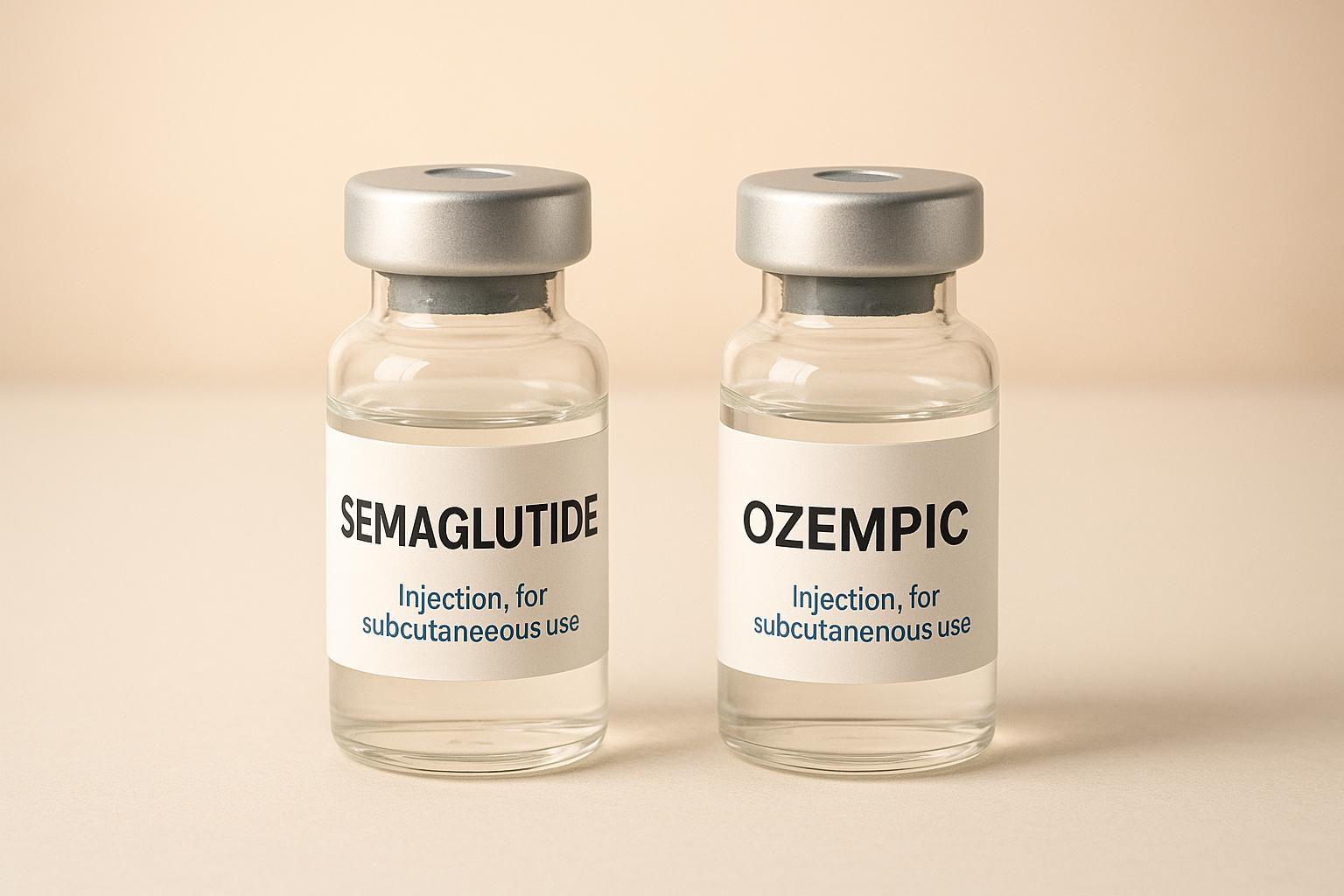
Ozempic vs generic semaglutide — what's the difference?
By the ZIVOLABS Medical Team · Updated April 2026 · 7 min read
If you have been researching weight loss medication in India, you have probably come across both "Ozempic" and "generic semaglutide" — and wondered whether they are the same thing, or whether one is better than the other.
The short answer: they contain the identical active molecule. The longer answer involves understanding why the price is so different, what the approval process means, and how to make sure whatever you are taking is legitimate.
What is Ozempic?
Ozempic is a brand name. It is the trade name given by Danish pharmaceutical company Novo Nordisk to their semaglutide injection. Novo Nordisk developed semaglutide, conducted the original clinical trials, obtained global regulatory approvals, and held the patent on the molecule for years.
In India, Ozempic was available as an imported product — which meant paying not just for the drug but for import duties, Novo Nordisk's brand premium, and distribution margins. The result was a monthly cost of ₹18,000–₹30,000, putting it out of reach for most Indian patients.
What is generic semaglutide?
A generic drug contains the same active ingredient as the original branded product, at the same dose, delivered the same way. When the patent on a molecule expires — or when a patent holder's exclusivity in a specific market lapses — other manufacturers can apply for regulatory approval to produce and sell their own version.
That is exactly what happened with semaglutide in India. Two Indian pharmaceutical manufacturers — Alkem Laboratories and Natco Pharma — applied to the DCGI (Drug Controller General of India) for approval to manufacture and sell semaglutide injections. Both received approval.
Their products:
Semasize (Alkem Laboratories) — available in 0.25 mg, 0.5 mg, and 1 mg pre-filled pens
Semanat (Natco Pharma) — available in 0.25 mg, 0.5 mg, and 1 mg pre-filled pens
Both are manufactured in India under GMP (Good Manufacturing Practice) standards and are fully DCGI-approved. They are not imports, not compounded versions, and not grey-market products.
Are they medically equivalent?
Yes. This is the most important question and it deserves a direct answer.
DCGI approval for a generic drug requires the manufacturer to demonstrate bioequivalence — meaning the drug must reach the same concentration in the bloodstream, at the same rate, as the reference product. The active molecule — semaglutide — is chemically identical. The regulatory standard for approval is that the generic performs the same way in the body.
The difference between Ozempic and generic semaglutide is the same as the difference between a branded paracetamol like Crocin and a generic paracetamol tablet — same molecule, same dose, same effect, different price.
So why is there such a price difference?
Branded drugs carry costs that generics do not:
Research and development recovery. Novo Nordisk spent billions developing and trialling semaglutide over more than a decade. The brand price partly recovers that investment.
Import costs. Ozempic sold in India was manufactured in Denmark and imported — adding customs duties and logistics costs.
Brand premium. Established pharmaceutical brands command a premium simply for being the original. This is true across every category of medicine globally.
Generic manufacturers do not bear the original R&D cost and manufacture locally. Their cost structure is fundamentally different — and those savings are passed to patients.
What about quality and safety?
This concern is completely legitimate — and the answer is that DCGI-approved generics from regulated Indian manufacturers are not a quality compromise.
Alkem Laboratories and Natco Pharma are large, established Indian pharmaceutical companies that manufacture medicines for both the Indian market and for export to regulated markets globally, including the US and Europe. Their manufacturing facilities are inspected and certified to international standards.
The risk of quality issues is not with these companies. It lies elsewhere — in unregulated, unbranded, or compounded semaglutide that is sold online through Instagram, WhatsApp, or unregistered websites. These products are not DCGI-approved and carry genuine safety concerns. They are not what we are discussing here.
Should I ask for Ozempic specifically, or is generic fine?
For the vast majority of patients, DCGI-approved generic semaglutide is the appropriate choice. You get the same clinical effect at a fraction of the cost.
There is no scenario where a patient benefits medically from paying ₹25,000/month for Ozempic when Semasize or Semanat at ₹4,999/month (inclusive of consultation and delivery through ZIVOLABS) delivers the same outcome.
Some patients request Ozempic by name because they have read about it internationally and trust the brand. This is understandable. But your doctor's job is to prescribe the molecule that is right for you — and the molecule is identical.
Frequently asked questions
Is Ozempic available in India in 2026? It is available in limited supply through some private hospitals and specialty pharmacies, but it is not widely stocked and continues to be significantly more expensive than Indian-manufactured generics.
Is it legal to import Ozempic personally from abroad? Importing prescription medication into India for personal use exists in a grey regulatory area. It is not recommended — there are cold-chain, customs, and authenticity risks, and it is not necessary given that DCGI-approved alternatives are now locally available.
Can my doctor prescribe Ozempic instead of a generic? Yes, a doctor can prescribe by brand name. But most metabolic specialists in India are now prescribing DCGI-approved generics given the equivalent efficacy and dramatically lower cost.
What about Wegovy — is that available in India? Wegovy is a higher-dose semaglutide pen (up to 2.4 mg/week) approved specifically for weight management. As of 2026, it is not widely available in India. The 1 mg dose available through DCGI-approved generics is the current standard for the Indian market.
Bottom line
Ozempic and generic semaglutide (Semasize, Semanat) contain the same active molecule at the same approved doses. The clinical effect is equivalent. The difference is brand, origin, and price — not performance.
For Indian patients in 2026, DCGI-approved generic semaglutide is the medically sound, cost-effective, and legally appropriate choice.
[Check if you qualify for semaglutide through ZIVOLABS →]
This article is for informational purposes only and does not constitute medical advice. Always consult a qualified doctor before starting any new treatment.

Join India's weight loss revolution
See a specialist online. Get prescribed. Receive at your door.
Not a diet. Not a gym plan.
Medical science. Finally in India.
Available in both Weekly Injection & Daily Tablets
Lose 15-17% of body weight — clinically proven*
Unlimited 24/7 support included
No hidden fees! Everything you need is included
Start for just Rs. 4999 + free delivery
Takes 5 minutes. No commitment required.